
The Art of the Advert

“In many ways, the work of a critic is easy…” – Anton Ego, Ratatouille (2007)
I have two grandparents who were successful political journalists. Ironically, they are a big reason why I have had little engagement with journalism in my life. They bemoan the state of newspapers today, with “too many ads and little ‘real’ journalism”. However, they believed it was a reader’s duty to engage with it anyway and to detect the biases. As a result, I never bothered with newspapers. I thought it better to be uninformed than misinformed.
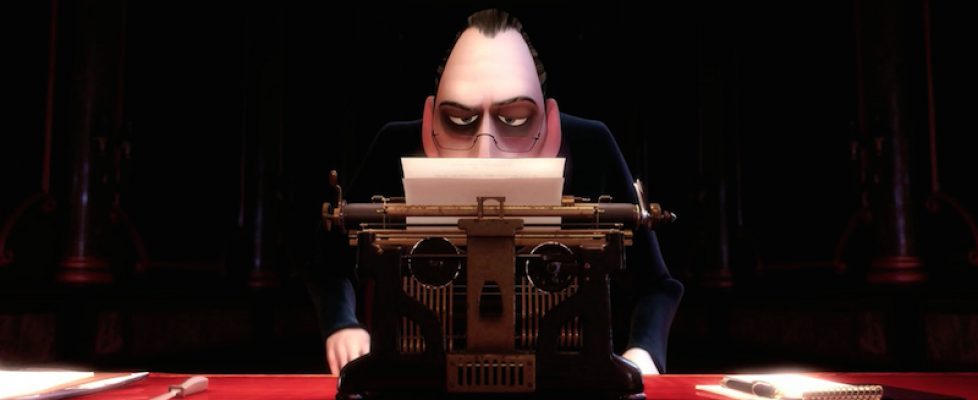
The only parts of the newspaper I ever paid attention to were the reviews. With reviews, I wanted an opinion. I pictured Anton Ego from Ratatouille (2007) [pictured above] writing at his desk, dedicated to the art of good critique. Naively, I believed that subjective criticism would be more immune to commercial interests. This week, The Standard reminded me that this is not the case.
I wanted to read reviews for the Renoir and Love exhibition at the National Gallery. I went through all the usual suspects—The Times, The Guardian, The Telegraph… I clicked on the link to The Standard’s review and saw a banner under the headline:
“The Standard’s journalism is supported by our readers. When you purchase through links on our site, we may earn an affiliate commission.”
Was this review an advert? Well, in what Jonathan Hardy calls the era of ‘integration without separation’, that’s not a simple question. I thought my grandparents complained about newspapers that felt more like magazines; full of adverts, but visually separate from editorial content. Now, I understand that line is increasingly blurry; adverts can look like journalism and read like journalism. In this way, the review itself functions as what Raul Ferrer-Conill would call a ‘coinciding object’. Even though The Standard has a policy for clearly labelling content paid for by advertisers, those labels were nowhere to be found here. The only ‘discernible object’ to be found was the banner, with distinctly unclear wording. It says that the newspaper “may” earn a commission. However, it doesn’t clarify whether the link to the National Gallery’s website was an affiliate link.
The review was positive. Perhaps Melanie McDonagh honestly enjoyed the show. But unfortunately, that doesn’t resolve the issue. The erosion of the news-business boundary raises questions about editorial independence. Regulations on advertising disclosure exist to fight the erosion of that boundary; the affiliate link was disclosed, if vaguely. But disclosure does not necessarily establish whether commercial interests have influenced editorial decisions. Even a correctly labelled affiliate link does not guarantee editorial independence. The Standard’s long-standing financing issues only enhance my suspicions.
This may seem like a trivial example. But why does the National Gallery feel the need to participate in this kind of advertising? It is, after all, the fifth most-visited museum in the country, promoting one of the world’s most commercially successful artists. Both have a good enough reputation that it shouldn’t feel the need to resort to this. It is easy to point the finger at the media for being disingenuous in exchange for money. But, as Jonathan Hardy explains, this pressure comes from both sides. The media needs funding, and marketers need to find new ways of reaching audiences in an increasingly saturated market. As Dallas Smythe pointed out, the audience itself is a product advertisers pay media companies to access. As digital platforms allow advertisers to access our attention more directly, media companies have to find new ways of making their audiences commercially attractive. Most days, I find the task of keeping my eyes open to all the ensuing advertising too daunting, finding myself wishing I lived in Anton Ego’s world instead.